
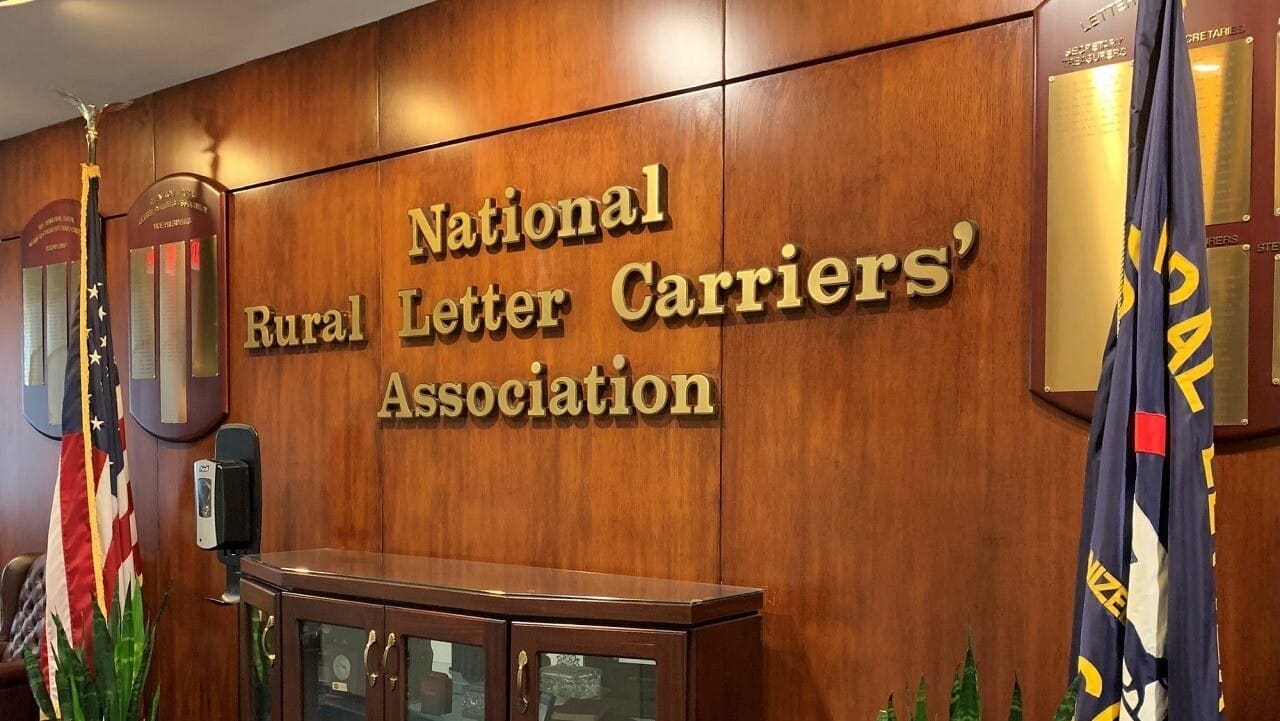
On February 17, 2026, the National Rural Letter Carriers’ Association (NRLCA) filed three separate National Step 4 grievances against the United States Postal Service. The first two grievances were anticipated—both stem from disputes that have been working their way through the Rural Route Evaluation Dispute Process (RREDP) over the past several months, and many of you have been following their progress closely. The third grievance breaks new ground, directly challenging the Postal Service’s interpretation of when it is permitted to use emergency contract routes to deliver rural mail—a position the NRLCA believes goes far beyond what the National Agreement allows.
GRIEVANCE #1: RRECS DPS LESS THAN 400 PIECES PER DAY
When the engineering panel designed RRECS, it established a clear rule: on any day your route receives fewer than 400 DPS pieces, that mail should be credited as caseable, and you should receive the corresponding casing standard (S009) applied to that day’s actual volume. This daily credit, when properly applied, reflects the real work you perform when you case, pull down, and tray your DPS. The issue is that the USPS is not following the logic the panel established.
Instead, the Postal Service looks only at the final six weeks of the evaluation period and uses that window to determine your bundle type and whether the caseable DPS standard applies—not just for those six weeks, but for your entire annual evaluation.
If the majority of days in that window had fewer than 400 DPS pieces, your route is classified as bundle type 1 for the whole year. Under bundle type 1, you receive caseable DPS credit for all DPS mail across the full evaluation—but your service time per box is reduced every day, which could affect your annual evaluation.
If 50% or more of days had 400 pieces or more, your route is classified as bundle type 2 for the entire year. Under bundle type 2, you receive zero caseable credit for DPS mail, for the whole year, even on the days your volume fell below 400 pieces.
This approach was never agreed to by the union and was never established by the engineering panel. It was implemented unilaterally, in violation of Articles 5 and 34.2 of the National Agreement, which require work standards to be fair and equitable and mandate union involvement before changes are made. The NRLCA urged the USPS to return to the panel’s intended daily logic. When the agency refused and declared an impasse, the union escalated the issue to Step 4.
GRIEVANCE #2: RRECS CARRIER ROUTE FLATS
This grievance addresses a foundational transparency problem at the heart of RRECS and one that may be affecting the pay of rural carriers nationwide.
Carrier Route Flats (CR Flats) are a key factor in how your route is evaluated and how much you are paid. CR Flats include bundled flats, WSH flats, and a 19% bonus credit applied to account for flat mail delivered directly to Post Office loading docks. Here is how the system is supposed to work: flat mail is processed at postal plants, the volume data is transferred into the RADAR report system, and that data with an additional 19% flows to the daily RADAR report you receive. The automatic 19% bump is to provide appropriate credit for flats delivered to the back dock. If the underlying CR Flats number is wrong, the 19% credit is wrong too, compounding the error.
The Postal Service maintains that WSH flats are being accurately captured in RADAR. The NRLCA challenges this position and believes the evidence supports the union’s concern. The CR Flats figures in RADAR have never been jointly validated by the Postal Service, the union, or affected carriers. The union has repeatedly asked the USPS to provide evidence that WSH flats and bundled flats are being accurately reported and has received nothing definitive in return. Meanwhile, hundreds of field-level disputes have been filed by rural carriers across the country raising the same concern: that credits are missing, incomplete, or simply wrong.
The evidence is difficult to dismiss. Statements from local management during the first RRECS evaluation period include supervisors acknowledging that bundle flat counts were not recorded, that flat volumes were inaccurately reported, and that carrier-kept counts did not match what the system showed.
The NRLCA is requesting joint validation of all CR Flats data sources and methodology, and a retroactive recalculation of every affected route evaluation if problems are found. Transparency in how your pay is calculated should not be optional; it should be a right.
GRIEVANCE #3: EMERGENCY CDS ROUTES
The Postal Service has been exploiting a narrow emergency provision in postal regulations to create Contract Delivery Service (CDS) routes in rural territory without a true emergency being present. Under postal regulations, emergency contracts are only permissible during genuine emergencies such as floods or natural disasters. The NRLCA contends the USPS has been stretching this limited authority far beyond its intended purpose.
The impact on carriers is serious and direct. Rural mail delivery belongs to the rural carrier craft, and there is a clear order of priority when a route goes vacant. Regular Carriers must first be offered the route. If no regular carrier is available, Part-Time Flexibles (PTFs) and Rural Carrier Associates (RCAs) have the right to become regular carriers and serve the route. If all internal options are exhausted, management is required to attempt to hire a regular carrier from the street. In addition, RCAs may choose to hold down a route during the extended absence of a regular carrier, earning additional leave benefits in the process. In some locations they are removing RCAs from their primary routes in order to provide work for these emergency contractors. By bypassing this process entirely and handing rural work to outside contractors, the USPS is cutting RCAs off from work opportunities and the path to career advancement and denying regular carriers their right to bid on vacant routes under Article 12.
This is unacceptable. The Postal Service is responsible for hiring and retaining RCAs and they are failing miserably. There is also serious concern about the integrity of RRECS data on contractor-served routes. When no scans are completed, delivery activity goes uncaptured—and the consequences for those route evaluations are unclear. The potential for harm to the rural craft through the evaluation process is significant and far-reaching. This grievance is to protect our fellow carriers’ work and the integrity of our evaluations that determine our pay.
The grievance cites violations of Articles 5, 19, 32.2, and 32.5 of the National Agreement, as well as Postal Operations Manual Section 531. Article 32.2 required the USPS to notify the union before making changes of this magnitude—no such notice was given. Article 32.5 governs when and how contract delivery service may be used and does not permit contract routes to substitute for established rural routes without a qualified emergency. These are not technicalities; they are the contractual guardrails that exist specifically to protect rural carrier work from being quietly handed away.
The NRLCA is demanding an immediate stop to all improper emergency CDS assignments, rescission of every unlawfully established contract route, full restoration of rural territory to the craft, and complete make-whole relief for all affected employees—including back pay, lost leave, and the right to bid on routes that were improperly withheld.
Conclusion
These three grievances share a common thread: the Postal Service making unilateral decisions that affect your pay, your work opportunities, and your rights, without union input and without accountability.
The NRLCA is challenging each of these issues at the highest level of the grievance process because every rural carrier deserves a system that is fair, transparent, and applied as intended.
If you have any questions, please do not hesitate to contact your assigned Union Representative for clarification.
Click here to view Step 4 grievance on DPS Less Than 400 Pieces Per Day
Click here to view Step 4 grievance on RRECS Carrier Route Flats
Click here to view Step 4 grievance on Emergency CDS Routes
Add your first comment to this post